
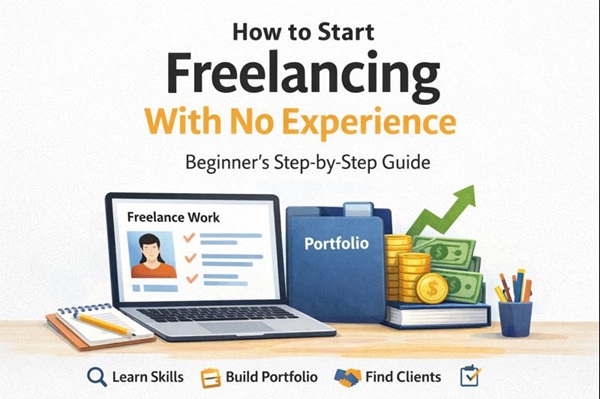
How to Start Freelancing with No Experience
Table of Contents
- Introduction
- What Is Freelancing?
- Can You Really Start Freelancing With No Experience?
- Step 1: Identify Your Marketable Skills
- Step 2: Build a Simple Portfolio
- Step 3: Choose the Right Freelance Platform
- Step 4: Craft a Winning Proposal
- Step 5: Deliver Quality and Ask for Reviews
- Step 6: Keep Learning and Expanding Your Skills
- How to Get Your First Freelancing Client ?
- Avoid Common Beginner Freelancing Mistakes
- How Much Time Does It Take to Build a Freelancing Career?
- Is Freelancing a Good Career for Freshers?
- Start Before You Feel Ready
Introduction
Freelancing is one of the fastest-growing career paths in 2026. The best part? You don’t need prior experience to begin. With the right strategy, platforms, and mindset, anyone can start earning online. This comprehensive guide will walk you through every step to launch your freelancing career successfully, even if you have no prior experience.
Freelancing is no longer just a side hustle. In 2026 and beyond, it is a full-time career option for students, freshers, homemakers, and working professionals who want flexibility and control over their income.
This guide will show you step by step how to start freelancing from scratch, even if:
- You have no experience
- You have no degree related to freelancing
- You have never earned online before
Let’s break the myth and help you build your freelancing career from the ground up.
What Is Freelancing?
Freelancing means working independently and offering your skills or services to clients on a project basis instead of being employed by one company.
You choose:
- Who you work with
- How much you charge
- When and where you work
Freelancers get paid for their skills, not their years of experience.
Can You Really Start Freelancing With No Experience?
Yes, you absolutely can.
Most clients care about results, not your background. If you can solve a problem, you are valuable. Experience helps, but it is not mandatory to get your first client.
What you do need is:
- A learnable skill
- Basic communication
- Consistency
Willingness to start small.
Step 1: Identify Your Marketable Skills
Even beginners have skills that can be monetized. Start by assessing what you can offer:
- Writing and blogging
- Graphic design using free tools like Canva
- Social media management
- Translation or language tutoring
- Virtual assistance
- Data entry and basic administrative tasks
- Customer support
- Video editing with beginner-friendly software
If you’re unsure, try free online courses or tutorials to build foundational skills.
Step 2: Build a Simple Portfolio
Clients want proof of ability. Create sample projects to showcase your skills:
- Write a blog post on trending topics
- Design a mock logo or social media post
- Record a voiceover sample
- Compile screenshots of your work or practice projects
Host your samples on Google Drive, Behance, or a free portfolio site like Wix or WordPress.
Step 3: Choose the Right Freelance Platform
Popular beginner-friendly platforms include:
- Fiverr – Best for gig-based work with quick turnaround
- Upwork – Ideal for long-term projects and building client relationships
- Freelancer.com – Good for bidding on a variety of jobs
Create a clear, professional profile highlighting your skills and portfolio.
Step 4: Craft a Winning Proposal
Your proposal should:
- Focus on solving the client’s problem
- Be short, clear, and personalized
- Highlight your willingness to learn and deliver quality
- Offer quick delivery or free revisions to build trust
Example Proposal:
“Hi! I’m new to freelancing but skilled in Canva and eager to help. I’d love to design your social media post with fast delivery and unlimited revisions.”
Step 5: Deliver Quality and Ask for Reviews
Once you land your first gig:
- Communicate clearly and professionally
- Meet deadlines consistently
- Overdeliver when possible to impress clients
- Politely request a 5-star review to build your reputation
Positive reviews will help you attract more clients and higher-paying projects.
Step 6: Keep Learning and Expanding Your Skills
Freelancing is competitive. Stay ahead by:
- Taking online courses to improve your skills
- Following industry trends and client needs
- Networking with other freelancers and clients
- Experimenting with new services or niches
Continuous improvement will increase your value and income potential.
Starting freelancing with no experience is possible if you focus on learning, building samples, and delivering value. With consistency and dedication, you can turn freelancing into a full-time career or a profitable side hustle.
How to Get Your First Freelancing Client ?
This is the most important step. Start Small and Smart
Don’t chase high-paying clients initially.
Focus on:
- Small projects
- Short tasks
- First positive review
Where Beginners Can Find Clients
- Freelancing platforms
- Social media
- Facebook & WhatsApp groups
- Cold messaging (done properly)
Beginner Pricing Strategy
- Charge slightly lower at the start
- Offer value, not desperation
- Increase prices after 2–3 projects
Your goal is trust, not money, in the beginning.
Avoid Common Beginner Freelancing Mistakes
Mistakes You Should Avoid
- Waiting to feel “ready”
- Copying others blindly
- Undervaluing your work for too long
- Ignoring communication
- Giving up too early
Freelancing rewards patience and consistency.
How Much Time Does It Take to Build a Freelancing Career?
It depends on:
- Skill choice
- Daily effort
- Learning speed
- Consistency
Most beginners get their first client within 30–60 days if they stay focused.
Is Freelancing a Good Career for Freshers?
Absolutely.
Freelancing:
- Builds real-world skills
- Pays based on ability
- Has no age or degree limit
- Allows remote work
- Can turn into an agency or business
Many freelancers earn more than traditional jobs over time.
Start Before You Feel Ready
If you are waiting for experience, confidence, or perfection—you’ll wait forever.
Start with:
- What you know
- What you can learn
- What you can practice
Your first project may not be perfect.
Your second will be better.
Your tenth will change your life
Starting freelancing with no experience is not a dream—it is a practical and achievable goal if you take the right steps. You don’t need a fancy degree, years of work history, or expensive courses to begin. What truly matters is choosing one skill, learning it consistently, practicing through real or self-made projects, and putting yourself out there with confidence.
Every freelancer you admire today once faced the same doubts you may be feeling now. The difference is that they started before they felt ready. Freelancing rewards action, patience, and continuous improvement. Even small projects, low-paying tasks, and early rejections are part of the journey and help you grow faster.
If you stay focused, keep learning, and deliver honest, quality work, freelancing can become a reliable source of income and long-term career freedom. Start small, stay consistent, and trust the process—your first client could be closer than you think.
Freelancing on Fiverr in 2026: A Complete Guide for Beginners

Rushikesh Gore is an SEO professional and digital marketing enthusiast with experience in Technical SEO, On-Page SEO, Link Building, and WordPress optimization. He regularly publishes content on SEO, freelancing, blogging, and online earning strategies. His work focuses on helping beginners build sustainable online income and improve website visibility.
Expertise: SEO, WordPress, Technical SEO, Freelancing, Blogging
3 Comments on “How to Start Freelancing with No Experience in 2026: The Ultimate Beginner’s Guide”
Comments are closed.