Table of Contents
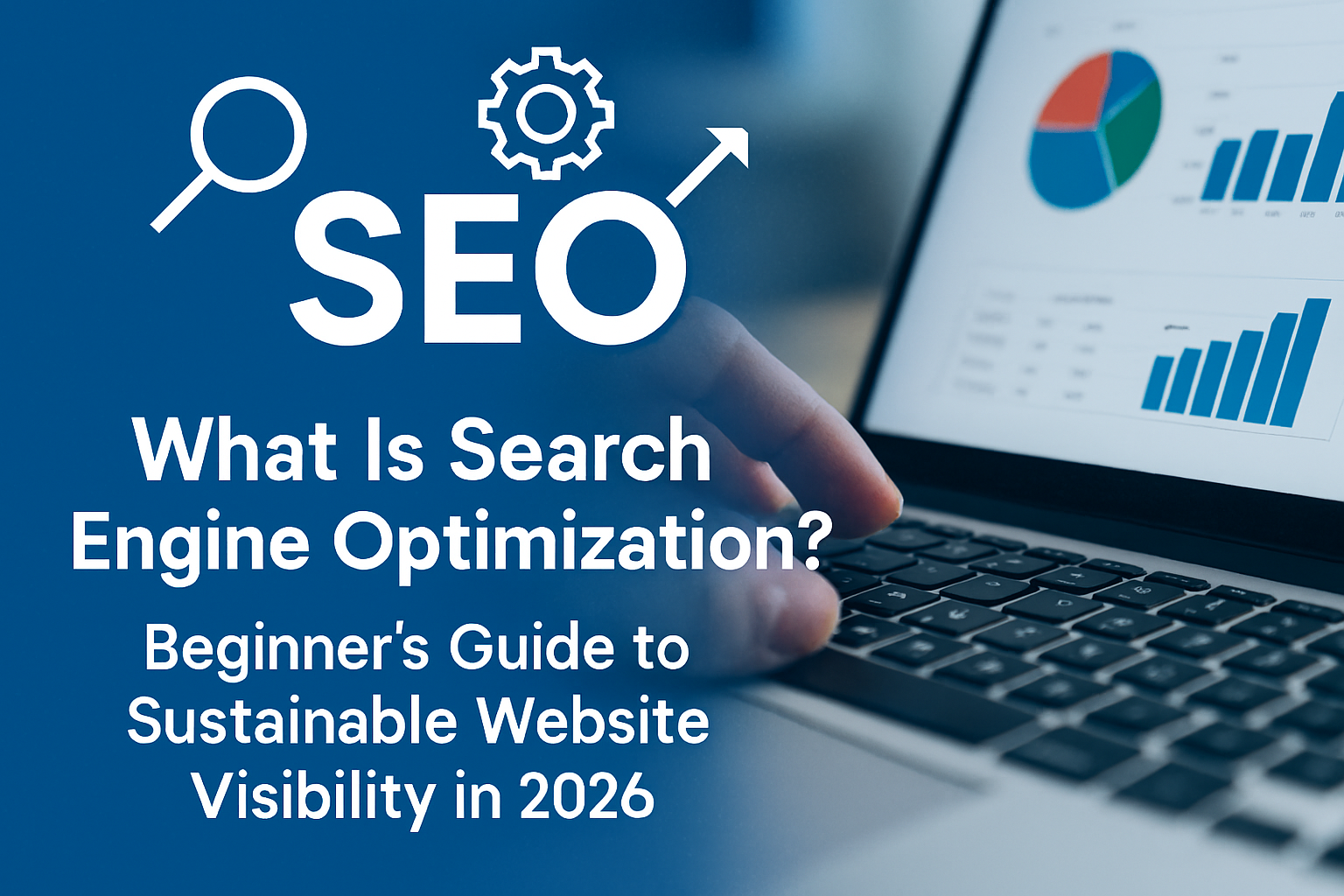
What Is SEO ? A Beginner’s Guide to Sustainable Website Visibility
If you’ve launched a website but aren’t seeing the traffic you hoped for, it’s time to ask: can people actually find you online? That’s where SEO—Search Engine Optimization—comes in. It’s not just a marketing buzzword. It’s the foundation of discoverability, credibility, and long-term digital growth.
Whether you’re a blogger, entrepreneur, or educator, this beginner’s guide will help you understand in plain language—and show you how it supports sustainable success.
What Is SEO ?
Search Engine Optimization it is the art and science of helping search engines understand, rank, and recommend your website. It’s how your content becomes visible when someone types a query into Google, Bing, or other platforms.
Think of Search Engine Optimization as your website’s translator—making your content readable, relevant, and trustworthy in the eyes of search engines.
Why Search Engine Optimization Is Essential for Beginners
You don’t need to be a tech expert to benefit from SEO. With a few smart strategies, even beginners can start attracting organic traffic and building authority.
Here’s why SEO matters:
- Free traffic: Unlike paid ads, SEO brings visitors without ongoing costs.
- Trust-building: High rankings signal credibility to users.
- Intent matching: SEO connects your content with people actively searching for it.
- Sustainable growth: SEO compounds over time, unlike short-term marketing tactics.
How Search Engines Work
Search engines send out digital scouts—called crawlers—to explore websites. These scouts index your content and evaluate its relevance, quality, and usability. When someone searches, algorithms decide which pages to show.
Key ranking factors include:
- Relevance: Does your content answer the query?
- Quality: Is it original, helpful, and well-structured?
- Experience: Is your site fast, mobile-friendly, and easy to navigate?
- Authority: Do other trusted sites link to yours?
Core Elements
Let’s break down the pillars of SEO that every beginner should understand:
1. Keyword Research
Keywords are the phrases people search for. Choosing the right ones helps your content meet real demand.
- Use tools like Ubersuggest or Google Keyword Planner.
- Focus on long-tail keywords (e.g., “eco-friendly SEO tips for small businesses”).
- Think like your audience—what would they type?
2. On-Page SEO
This involves optimizing elements directly on your site:
- Title tags: Include your main keyword naturally.
- Meta descriptions: Write compelling summaries for search results.
- Headings (H1, H2, H3): Organize content clearly.
- URLs: Keep them short and keyword-rich.
- Internal links: Guide users to related content.
3. Content Optimization
Your content is your currency—valuable, exchangeable, and the key to earning attention online.
- Solve real problems with clarity.
- Use visuals, bullet points, and short paragraphs.
- Update outdated content regularly.
- Avoid keyword overload—write for humans first.
4. Technical SEO
This ensures search engines can efficiently crawl and index your site.
- Improve page speed.
- Use mobile-responsive design.
- Fix broken links and duplicate content.
- Submit your sitemap to Google Search Console.
5. Off-Page SEO
This builds your site’s reputation beyond its borders:
- Backlinks: Earn links from reputable sites.
- Social signals: Shares and mentions on social media.
- Guest posts: Publish on trusted platforms in your niche.
Search Engine Optimization and Sustainability: A Digital Impact
It isn’t just good for your business—it’s good for the planet.
- Efficient websites use fewer resources: Fast-loading, optimized sites reduce server strain and energy use.
- Less reliance on paid ads: Organic traffic minimizes energy-intensive ad campaigns.
- Empowers informed choices: It helps users find accurate, helpful content—supporting conscious consumption and education.
By investing in SEO, you’re building a leaner, greener digital presence.
Common Mistakes to Avoid
Even seasoned marketers slip up. Here’s what beginners should watch out for:
- Ignoring mobile optimization
- Using duplicate or thin content
- Overloading pages with keywords
- Neglecting meta descriptions
- Forgetting to track performance
Final Thoughts
SEO isn’t a quick fix—it’s a mindset. It’s about creating value, building trust, and showing up consistently. As a beginner, your goal isn’t to master every technical detail overnight. It’s to start small, stay curious, and keep improving.
Freelancing on Fiverr in 2025: A Complete Guide for Beginners