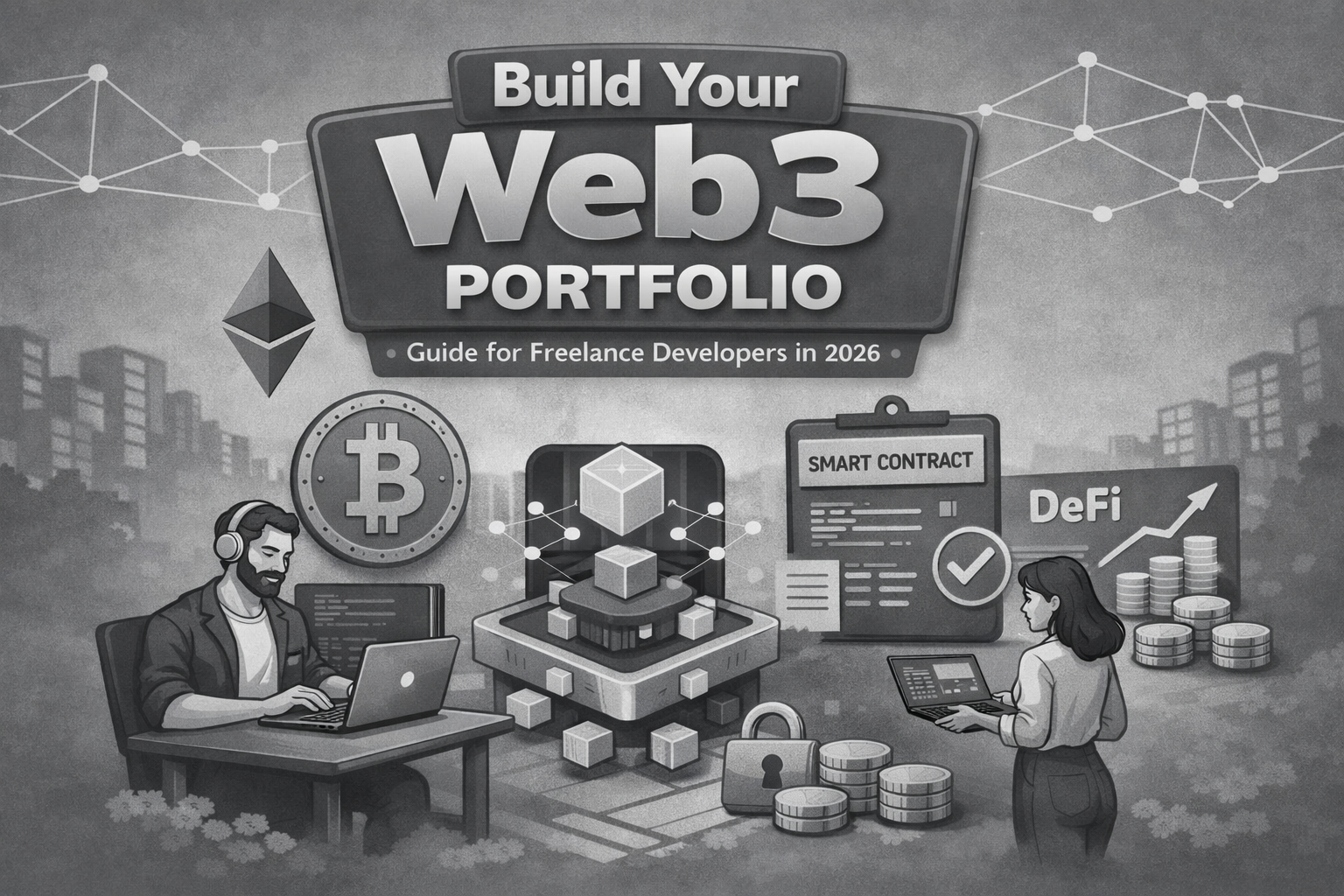
How to Build a Web3 Portfolio: A Guide for Freelance Developers in 2026
Table of Contents
Introduction
The rise of decentralized technologies has transformed how freelance developers showcase their skills. In 2026, the demand for blockchain specialists is stronger than ever, fueled by crypto, NFTs, DeFi, and decentralized applications (DApps).
A strong portfolio in this space is no longer optional—it’s the key to thriving in the new digital ecosystem. This guide will walk you through building a portfolio, highlighting essential projects, and exploring freelancing opportunities that can shape your career.
What is a Web3 Developer Portfolio?
A Web3 developer portfolio is a curated showcase of blockchain projects, smart contracts, and decentralized applications. Unlike traditional portfolios, it highlights skills in Ethereum, Solidity, and crypto infrastructure development. It demonstrates your ability to build secure, scalable, and innovative solutions within the decentralized ecosystem, helping clients and employers quickly assess your expertise in Web3 freelancing and blockchain programming.
Difference Between Traditional and Web3 Portfolios
Traditional portfolios display websites, apps, or design projects. A Web3 portfolio, however, emphasizes blockchain projects, smart contract development, and contributions to decentralized web applications. It proves your ability to work with crypto, NFTs, and DeFi protocols, showcasing technical depth in Solidity programming and decentralized ecosystems. This distinction highlights your readiness for the growing demand in Web3 freelancing and blockchain careers.
Importance of Showcasing Blockchain Projects
Clients hiring Web3 developers want evidence of hands-on experience with Ethereum, Solidity, tokenization, and decentralization. A strong blockchain portfolio validates your ability to design secure smart contracts, build scalable DApps, and contribute to innovative crypto solutions. By showcasing real-world projects, you establish credibility, attract freelance opportunities, and position yourself as a trusted professional in the competitive Web3 developer career guide landscape.
Essential Skills to Include in a Web3 Portfolio
Smart Contract Development
Smart contracts are the backbone of decentralized applications. As a freelance developer, showcasing your expertise in Solidity programming, smart contract security, and Ethereum-based deployments is essential. These skills prove your ability to write self-executing code that handles transactions, permissions, and logic without intermediaries. Highlighting projects that involve token creation, DeFi protocols, or NFT minting demonstrates your technical depth. Including audit-ready contracts and test coverage further builds trust and shows you understand the importance of secure, scalable blockchain solutions.
Blockchain Architecture
Understanding blockchain architecture sets you apart from surface-level developers. Your portfolio should reflect knowledge of blockchain programming skills, consensus mechanisms like Proof of Stake or Proof of Work, and how nodes interact in a decentralized network. Include examples of how you’ve designed or contributed to scalable systems, optimized gas usage, or integrated Layer 2 solutions. This shows you can build robust infrastructure for real-world applications. Clients value developers who grasp both the code and the underlying architecture powering decentralized ecosystems.
DeFi and NFT Development
DeFi and NFTs are two of the most dynamic sectors in blockchain. Including DeFi protocols like staking, lending, or yield farming in your portfolio shows you can build financial tools that operate without banks. Similarly, showcasing NFT marketplaces, minting platforms, or tokenization projects proves your versatility. These projects demonstrate your ability to work with smart contracts, wallet integrations, and metadata standards. They also reflect your adaptability to emerging trends and your understanding of user experience in decentralized environments.
Security Practices
Security is non-negotiable in blockchain development. Your portfolio should highlight experience with smart contract audits, identifying vulnerabilities like reentrancy or overflow attacks, and using tools like MythX or Slither. Demonstrating how you’ve implemented best practices—such as access control, fail-safes, and test-driven development—shows clients you prioritize safety. Including documentation of your audit process or contributions to bug bounty programs adds credibility. In a space where one flaw can cost millions, showcasing security expertise builds trust and sets you apart.
Best Web3 Projects to Add to Your Web3 Portfolio
Build a Decentralized Application
Creating a DApp demonstrates your ability to design and deploy decentralized web applications. A live demo shows practical skills in blockchain programming, smart contracts, and user interaction within a decentralized ecosystem, proving you can build scalable solutions.
Create an NFT Marketplace
An NFT marketplace highlights your expertise in crypto portfolio management, wallet integration, and tokenization. It showcases versatility in handling NFTs, smart contracts, and decentralized trading platforms, making your portfolio attractive to clients seeking innovative blockchain solutions.
Develop a DeFi Smart Contract
Building DeFi smart contracts demonstrates knowledge of Solidity programming, lending, staking, and yield farming. These projects prove your ability to create secure, transparent, and efficient financial applications within the Web3 ecosystem, strengthening your credibility as a blockchain developer.
Token Creation Projects
Tokenization projects highlight your ability to design and deploy crypto development solutions. By creating tokens on Ethereum or other blockchains, you showcase skills in smart contract development, blockchain architecture, and decentralized finance, making your portfolio stand out.
How Freelance Developers Can Showcase Web3 Work
GitHub Repositories
Maintaining open-source contributions on GitHub boosts visibility and credibility. It allows potential clients to review your Web3 projects, coding style, and collaboration skills, proving your active involvement in the blockchain developer community.
Live DApp Demos
Interactive DApp demos provide real-time proof of your decentralized application development skills. They help clients experience your work firsthand, demonstrating usability, scalability, and innovation in blockchain projects.
Smart Contract Audits
Conducting smart contract audits shows expertise in identifying vulnerabilities and ensuring security practices. Including audits in your portfolio highlights your ability to deliver safe, reliable, and professional blockchain solutions, which is highly valued in freelancing.
Case Studies
Writing detailed Web3 developer portfolio examples with case studies helps showcase problem-solving skills. Narratives explain challenges, solutions, and outcomes in blockchain projects, proving your ability to deliver secure, innovative, and scalable results. Case studies also highlight collaboration, technical expertise, and creativity, making your portfolio more persuasive to potential clients and employers in the freelancing ecosystem.
Platforms to Find Freelance Work
Web3 Job Boards
Dedicated Web3 job boards connect developers with blockchain career opportunities. They feature projects ranging from smart contract development to DApp creation, helping freelancers find relevant work and build credibility in the decentralized ecosystem.
DAO Opportunities
Decentralized Autonomous Organizations (DAOs) offer collaboration in governance and project development. Freelancers can contribute to Web3 projects, earn tokens, and gain visibility, making DAOs a valuable platform for decentralized career growth.
Crypto Startup Ecosystems
Emerging crypto startups often seek Web3 developers for innovative projects. Joining these ecosystems provides freelancers with hands-on experience, networking opportunities, and the chance to showcase skills in blockchain programming and decentralized application development.
Tools for Building a Professional Portfolio
GitHub for Code Hosting
GitHub is essential for hosting code, sharing open-source contributions, and showcasing Web3 projects. It demonstrates collaboration, coding style, and technical expertise.
Web3 Hosting Platforms for Live Demos
Platforms like IPFS or decentralized hosting allow developers to present live DApp demos, proving functionality and scalability in real-world environments.
Blockchain Explorers for Transaction Proof
Using blockchain explorers validates your work by showing transaction history, smart contract deployments, and project authenticity.
Developer Documentation Tools for Showcasing Web3 Skills
Clear documentation tools highlight your ability to explain complex Web3 skills, making your portfolio professional and client-friendly.
Future of Web3 Freelancing in 2026
Growing Demand for Blockchain Developers Across Industries
Industries from finance to gaming increasingly need blockchain developers. This demand ensures steady opportunities for freelancers with strong portfolios.
Decentralized Work Ecosystems Powered by DAOs
DAOs are reshaping freelancing by enabling decentralized collaboration, transparent payments, and token-based rewards, creating new career paths for Web3 developers.
Remote Web3 Teams Collaborating Globally
In 2026, remote Web teams thrive worldwide, allowing freelancers to work across borders, contribute to blockchain projects, and grow careers in decentralized ecosystems.
Q1: How do I build a Web3 developer portfolio?
Start with Web3 projects for portfolio like DApps, smart contract development, and NFT marketplaces. Showcase them on GitHub and live demos.
Q2: What projects should be included in a blockchain portfolio?
Include blockchain projects for developers such as DeFi smart contracts, tokenization projects, and crypto portfolio tools.
Q3: How can freelancers start blockchain development?
Begin by learning Solidity, contributing to open-source blockchain projects, and applying through platforms that connect developers with decentralized freelancing opportunities. Building small DApps, experimenting with smart contracts, and joining crypto communities will help you gain practical experience and showcase your skills to potential clients.
Q4: What skills are required for Web3 developers in 2026?
Key Web3 skills include smart contract security, blockchain programming skills, decentralized application development, and crypto infrastructure development.
How to Use Multi Agent Systems to Automate Your Freelance Workflow SERP Research